
Bridged Damp Proof Course Explained: Causes, Risks and Practical Remedial Solutions

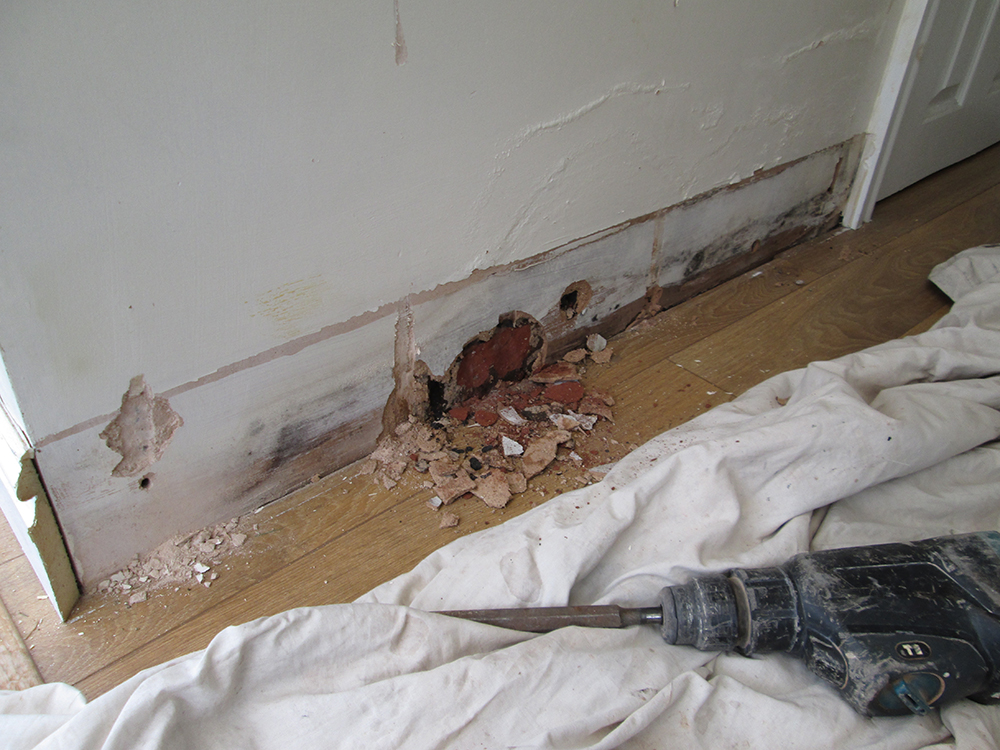
You need to recognise that a damp proof course (DPC) can be present and still be ineffective. Modern and mid-20th century buildings often include a physical DPC, yet faults in design, sequencing or finish can allow moisture to bypass that barrier and affect internal finishes.
Common breaches occur where internal finishes or floor constructions make direct contact with elements below the DPC. Examples include plaster or render extending down to a solid floor, debris filling cavities up to or past the DPC, or an external ground level sitting above the DPC line. Where contact exists, moisture stored in the floor or lower wall can migrate into plaster and timber at the floor‑wall junction.
You will usually see the effects at low level, typically rising no more than 200–300 mm above the finished floor, though exact heights depend on the cause. Visual signs include damp staining, blistering or flaking of plaster and paint, and soft or decayed skirting boards. Moisture meter readings from the skirting and plaster are often markedly higher than readings from the masonry above the DPC.
Carry out a systematic inspection to locate the DPC and compare its position with internal floor levels and external ground levels. In solid‑floor buildings the DPC should be visible above finished floor level; if it is concealed by plaster or floor finishes you may need to expose small areas to verify its position. In suspended timber floors the DPC is usually below floor level and less likely to be breached in the same way.
Use targeted moisture testing to distinguish a breached DPC from a failed or absent DPC. Sample and test plaster from the wet area and compare results with masonry taken from just above the DPC line. A significantly higher moisture content in the plaster than in the brick or mortar above the DPC indicates moisture entry via the finish or floor rather than capillary rise through the wall.
Typical failure mechanisms related to construction sequencing include floors or surface membranes being installed after internal plastering, leaving the plaster in contact with an untreated floor edge. In older properties, asphalt screeds were often applied late and did not form a continuous seal at the wall junction, allowing moisture transfer at that interface. Damage to surface membranes—such as cracks near doorways or intentional penetrations from carpet fixings—also permits local moisture migration into adjacent plaster.
Practical indicators and causes at a glance:
- Visible plaster contacting the floor or covering the DPC line.
- High moisture readings in skirting or plaster (often 20%+ in timber skirtings) while masonry above the DPC remains comparatively dry.
- Signs of timber decay or wet rot on the reverse of skirting boards.
- Floor membranes (asphalt or later plastics) missing, incomplete at the wall junction, or mechanically damaged.
- Debris or mortar bridging within cavities that creates a physical path over the DPC.
Simple, non‑destructive checks you can perform:
- Trace the DPC visually around accessible walls and note its height relative to internal and external levels.
- Probe skirtings and plaster for softness, staining and detached finishes.
- Take moisture samples from plaster and from masonry above the DPC for comparative analysis.
- Inspect floor membranes for cracks, repairs or penetrations at the wall interface.
Remedial measures focus on separating the wet element from finishes or restoring a continuous floor/wall membrane. Typical corrective actions include cutting back plaster above the DPC line, reinstating or extending a floor membrane up to the wall junction, and removing bridging debris in cavities. Address any damaged surface membranes promptly to prevent recurring ingress; small repairs to asphalt or synthetic membranes at the wall edge can markedly reduce moisture transfer.
When documenting a suspected breach, record moisture readings, sample locations, visible evidence of decay, and the DPC’s relative height to internal and external levels. Photographic evidence of plaster extension, skirting decay and membrane damage helps support a clear diagnosis and informs the most effective remedial approach.
Bear in mind that the presence of a DPC does not guarantee protection unless the surrounding details—floor finishes, skirtings, cavity integrity and membrane continuity—are correctly executed and maintained.
Frequently Asked Questions
What role does a bridged damp-proof course play in buildings?
A damp-proof course (DPC) should stop ground moisture rising into walls. When it becomes bridged, that protective gap between the DPC and external ground or paving is lost. You should treat a bridged DPC as a failure of the barrier, not an intentional feature.
How does bridging happen and what effect does it have on moisture control?
Bridging occurs when soil, paving, mortar, render or other materials sit higher than the DPC level and create a continuous path for water. That path allows capillary action or splash/penetrating water to bypass the DPC and enter internal fabric. The result is damp patches, salt staining and possible plaster decay on the wall above the original DPC line.
What products and materials are commonly used to form a damp-proof course?
Manufacturers supply several DPC types: flexible bituminous or polymer sheets, slate or lead alternatives, and chemical injection creams that form a water-repellent barrier in the mortar bed. Modern builds often use continuous polymeric DPC membranes at the mortar bed; retrofit solutions often rely on chemical injections or surface membranes. Choose materials compatible with the wall substrate and local building regulations.
Can you fix a bridged damp-proof course, and which repair approaches are typical?
Yes—repairs depend on cause and access. Typical methods:
- Lower external levels (re-grade or remove raised paving) to restore the required air gap.
- Rebuild or chase out and insert a new physical DPC if walls are exposed.
- Use chemical injection DPCs where inserting a physical membrane is impractical.
- Apply breathable internal or external plaster and undertake salt remediation as a complementary measure. Select the least invasive option that resolves the bridging and follow up with moisture and salt control.
What signs point to a failed or bridged damp-proof course in your property?
Look for:
- Damp stains or tide lines on internal walls at low levels.
- Flaking, powdering or blistering plaster and peeling paint.
- White or brown salt deposits (efflorescence) on walls.
- Damp odours or increased mould growth near the floor.
- External features such as raised soil, new paving, added render or high mortar fillets sitting above the DPC line. Note these signs alongside moisture measurements to confirm the issue.
How does bridging change the DPC’s performance over time?
Initially bridging simply bypasses the barrier, allowing moisture ingress. Over time, continuous moisture encourages salt migration, plaster deterioration and timber or flooring decay, which worsens remedial needs. Persistent bridging can render the original DPC ineffective and necessitate more extensive and costly repairs if you do not address the external cause.
