
Identify Signs of Dry Rot: Expert Guide to Spotting, Assessing and Preventing Structural Damage

Dry rot can quietly damage timber in your home and, if left unchecked, lead to costly repairs and weakened structure. Knowing how to spot it early helps you limit harm and avoid extensive remedial work.
This guide explains the typical signs of dry rot at different stages and how to tell it apart from wet rot. It also outlines the practical steps you should take if you suspect dry rot in your property.
What is dry rot?
Dry rot is a destructive fungus that attacks timber and nearby materials when moisture and poor ventilation persist. It draws water from damp areas, extending fungal growth into drier wood and plaster. You may find weakened, crumbly timber, spreading mycelium or fungal filaments, and rot that advances through walls or floors if leaks, rising damp or inadequate airflow go unaddressed.
What does dry rot look like?
Spore dust and powdery residue
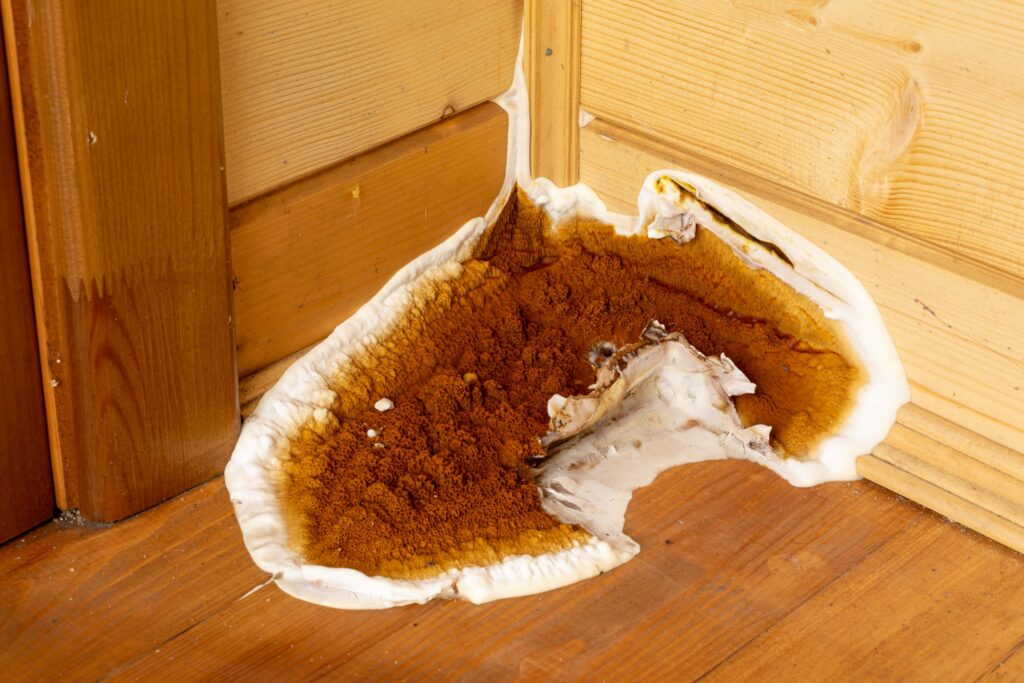
You may notice fine, powdery deposits near affected timber. These deposits are often brick‑orange to rust in colour and can collect in small piles on surfaces beneath fruiting growths. Because the dust contains reproductive spores, finding it is a strong indicator the fungus has reached a stage capable of spreading to new areas of your home.
Keep in mind the powder can be dislodged easily by movement or drafts, so a single smear or a faint dusting still warrants closer inspection. If you disturb it, avoid breathing the dust and consider photographing the area for an expert.
Threaded fungal growth
Early colonisation produces hair‑like threads across damp wood and adjacent materials. These grey or off‑white filaments — hyphae — often form a network that grips timber, plaster and even mortar. You might see them as fine webbing running over joists, floorboards and wall timbers.
If you spot these strands, the interior of the timber is likely compromised even where the surface looks intact. Check nearby hidden spaces such as behind skirting, under floorboards or inside roof voids.
Cottony, wool‑style mycelium
As the fungus advances the threads coalesce into a soft, cotton‑like mass with a silky texture and a pale grey to white appearance. This mycelial growth commonly hides in dark, humid spots — under floors, inside cupboards or in cellar corners. It acts like a feeding network, breaking down wood fibres so the fungus can extract nutrients.
Because this growth spreads aggressively, you may find it extending some distance from the original source, creeping across surfaces and into adjacent construction materials.
Mushroom‑like fruiting structures
In established infestations you can find flattened, plate‑shaped fruiting bodies that resemble small, pancake‑like mushrooms. These are usually rusty orange with a paler edge and sit on or beside the attacked timber. When mature they discharge the orange spore dust described above.
If you encounter any of these signs, photograph the area, avoid disturbing the growth and arrange a professional inspection to confirm the diagnosis and plan remedial action.
Other signs of dry rot
You may notice a persistent, musty smell in affected rooms — a mushroom‑like odour that lingers even when the space is aired. This smell comes from fungal activity breaking down the timber and is often strongest in enclosed or poorly ventilated areas.
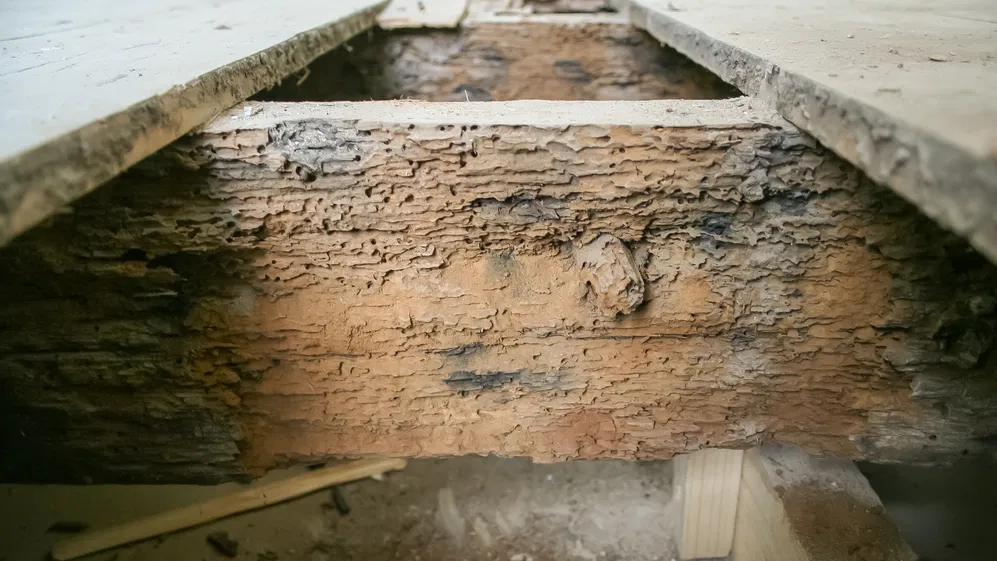
Look for splitting or cuboidal cracking in timber surfaces. Boards, joists and skirting can develop small, square‑like fractures that deepen with time; plaster and nearby masonry may also shrink or crack as the timber loses volume.
Watch for changes in colour and sound. Infected wood can darken or take on a dull, stained appearance. When you tap suspect timber, it may sound hollow or papery, which indicates a loss of internal strength and possible decay beneath the surface.
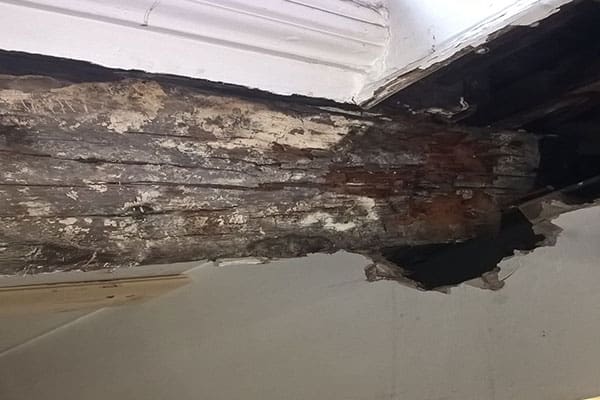
Note how quickly damage appears to spread. Dry rot can advance through floors, walls and ceilings, sometimes unseen, and can invade adjacent materials such as plaster and timbers in other rooms. Rapid progression is a warning sign that decay is active and needs prompt attention.
Quick checklist:
- Persistent, mushroom‑like odour in enclosed areas
- Cuboidal or linear cracks in timber and shrinking nearby plaster
- Darkened timber with a hollow sound when tapped
- Fast or unexplained spread of damage across structures
If you spot one or more of these signs, have a qualified surveyor or damp specialist inspect the area to confirm whether dry rot is present and advise on appropriate action.
How does it differ from wet rot?
You’ll notice dry rot behaves very differently from wet rot. Dry rot can move moisture through wood and across building fabric, so it spreads away from the original damp source and attacks distant timbers. Wet rot, by contrast, stays where persistent moisture exists and cannot grow through masonry.
Visual clues help you tell them apart. Dry rot often shows orange spore dust, white, cobweb-like mycelium and brittle, cuboidal cracking of timber; it may produce pancake-like fruiting bodies. Wet rot lacks the orange spores and fruiting bodies; instead you’ll see dark fungal strands, water stains and staining on damp, discoloured wood.
Trust your nose and touch. Dry rot gives a musty, mushroom-like smell; the affected wood feels dry, crumbly and may sound hollow when tapped. Wet rot smells damp and rotten; the timber feels soft, spongy and saturated, collapsing easily because of retained moisture.
Quick identification guides what treatment and repair approach you should use.
Where might you spot signs of dry rot?
Check hidden, seldom-used spots first — behind furniture, under old shelving, inside cupboards, beneath floorboards and in cellars. Look for orange or rust-coloured powdery dust on surfaces or the floor; this spore dust is a clear indicator.
Tap timber with a screwdriver or knuckle: hollow, brittle or crumbling wood often means decay beneath the surface. Smell for a persistent musty or mushroom-like odour in unused rooms or storage areas.
Inspect close to external walls, around window and door frames, and near plumbing runs for changes in texture, shrinkage or cracked paint. If floorboards sound loose or creak more than usual, lift a board and check the joists and ends for dry, flaky rot.
If you’re unsure, get a qualified surveyor to confirm.
Get help from an expert
If you suspect dry rot, contact a qualified damp or timber specialist to inspect your property and advise next steps. They can pinpoint the cause, identify affected wood, and recommend targeted actions such as removing decayed timber, applying appropriate fungicides, and improving ventilation or damp control.
- Request a written report and costed remedy plan.
- Ask about guarantees and follow‑up checks.
- Consider a free survey if it’s offered in your area.
Frequently Asked Questions
What common signs show timber has dry rot?
Look for crumbly, shrunken wood that flakes easily and may break into cuboid pieces. You might see pale, cotton-wool-like fungal threads (mycelium) on timber surfaces or rusty orange-brown spore dust nearby. Cracked or warped wood, reduced structural strength, and visible fungal fruiting bodies (mushroom-like caps) are further indicators.
How can you find dry rot hidden behind plaster or drywall?
Check for localised bulging, staining, or paint that peels or cracks without an obvious cause. Tap suspect areas — a hollow, papery sound suggests decayed timber behind the finish. Use a small probe or screwdriver at discreet points to test softness, and follow up persistent musty smells or spore dust appearing at edges or vents with a moisture and timber inspection.
What does early-stage dry rot typically look like?
Early dry rot may show as fine, off-white or cream mycelium on timber and nearby masonry. The wood can feel dry but becomes brittle and may split along the grain. Small orange-brown spore deposits or the first tiny fruiting bodies can appear as the infestation progresses.
Are there particular smells that point to dry rot?
Yes. You may notice a persistent, musty, damp-like odour even if surfaces seem dry. The scent often comes from fungal activity in enclosed spaces such as cupboards, floor voids, and behind skirting boards. Use the odour as a prompt to inspect further rather than a sole confirmation.
Which parts of a building most often develop dry rot?
Look in areas with elevated humidity, poor ventilation or historic water ingress: under floorboards, in suspended timber joists, around leaking roofs, inside wall cavities, and near damp basements or cellar walls. Timber close to plumbing, window sills, or where damp membranes have failed is also at higher risk.
How do you tell dry rot apart from wet rot?
Compare moisture and appearance: wet rot thrives where timber stays continuously wet and usually leaves dark staining and spongy, swollen wood. Dry rot can spread from drier-appearing timber, shows cottony mycelium and orange spore dust, and often causes cuboidal cracking. Measure moisture content and inspect for fungal structures to help distinguish them; wet rot needs moisture source control, while dry rot often requires more extensive timber replacement and fungal eradication.
