
Moisture and Salt Decay in Masonry: Causes, Diagnosis and Practical Repair Strategies

You will learn how moisture and dissolved salts interact with porous building materials and why those interactions lead to visible and structural damage. Moisture rising, driven or retained within masonry carries soluble salts into pore networks; when that moisture evaporates, the salts crystallise and leave residues. Repeated wetting and drying cycles concentrate these salts and increase the mechanical stresses within the material, accelerating loss of surface material and internal cohesion.
Salt damage affects both new and old construction, and it can originate from several sources. In new work, salts often come from mixing water, contaminated building products or transient construction processes; these typically produce surface efflorescence — a white, powdery deposit that is mostly cosmetic. In older structures, salts more commonly arrive through contamination of the water that reaches the masonry (ground salts, atmospheric pollutants, sea spray, de-icing salts, or salts from previous repairs), or from changes in site drainage and detailing introduced after construction. When salts persist in the moisture that repeatedly penetrates and evaporates, they drive progressive deterioration rather than only a one-off deposit.
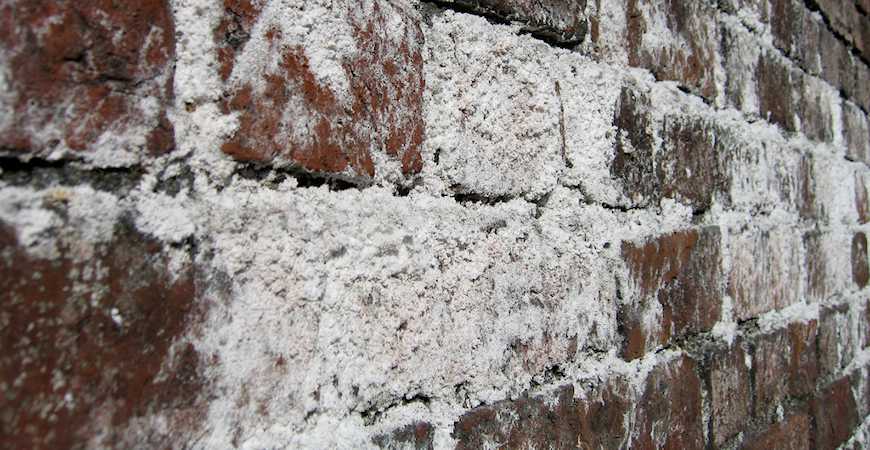
You must treat the location of crystallisation as crucial. Surface efflorescence forms when salts migrate to an exposed surface and crystallise there; crypto-efflorescence occurs when crystallisation happens inside the pore network or at interfaces between layers. Crypto-efflorescence typically causes the most severe damage because crystals that form within pores or at bonding planes generate expansive stress directly inside the material. That stress may exceed the tensile strength of the stone, brick or mortar, causing flaking, spalling, delamination of plaster or face shaling.
Environmental cycling controls how rapidly damage progresses. Alternating wetting and drying (for example, from periodic rain, tidal spray, fluctuating groundwater or seasonal humidity shifts) promotes salt transport and repeated crystallisation events, each cycle adding incremental mechanical damage. Even in environments with relatively stable air conditions, internal humidity changes or impeded drying due to coatings or impermeable layers can concentrate salts and lead to internal crystallisation over time.
Coatings and membranes influence where and how salts deposit. Impermeable or semi-impermeable layers can reduce surface evaporation, encouraging salts to crystallise deeper in the masonry. Conversely, breathable surfaces often allow salts to migrate and deposit on the exterior, limiting internal stress but producing more visible efflorescence. Different treatments therefore change whether salts appear as superficial powdery deposits or as concealed, destructive crystallisation beneath render or within pores.
A simple experimental approach can reveal these processes within a short period if you accelerate driving factors. Submerging or standing porous stone in saline solutions forces capillary rise and salt uptake, and using elevated salinity speeds visible salt deposition. Time-lapse observation captures progressive changes: initial discolouration and damp rise, early surface salting within days, formation of tidemarks where salts concentrate, and later blistering, fracturing and spalling as internal stresses exceed material cohesion. Visual monitoring alone demonstrates patterns of deposit and surface deterioration, even if it cannot quantify microscopic mass loss.
Practical observations you should note during a short, controlled experiment:
- Day 0–7: wicking and visible base discolouration; light surface salting may appear.
- Day 7–21: clearer tidemarks and more extensive surface crystal deposits; coated samples may show salting through micro-defects.
- Day 21–35+: blistering, small fractures and early spalling where salts concentrate; porous faces may begin to detach.
You should expect variability depending on salt type, concentration and exposure duration. Single-salt systems such as sodium chloride reproduce many visible behaviours but do not capture the full complexity present in natural settings, where mixed salt assemblages (sulphates, chlorides, nitrates) vary in solubility, crystallisation pressure and hygroscopic properties. Mixed salts can produce different crystallisation sequences, alter deliquescence points and interact to change the timing and location of damage.
When you inspect masonry for salt-related decay, combine visual signs with an understanding of moisture pathways and material properties. Key indicators to record include:
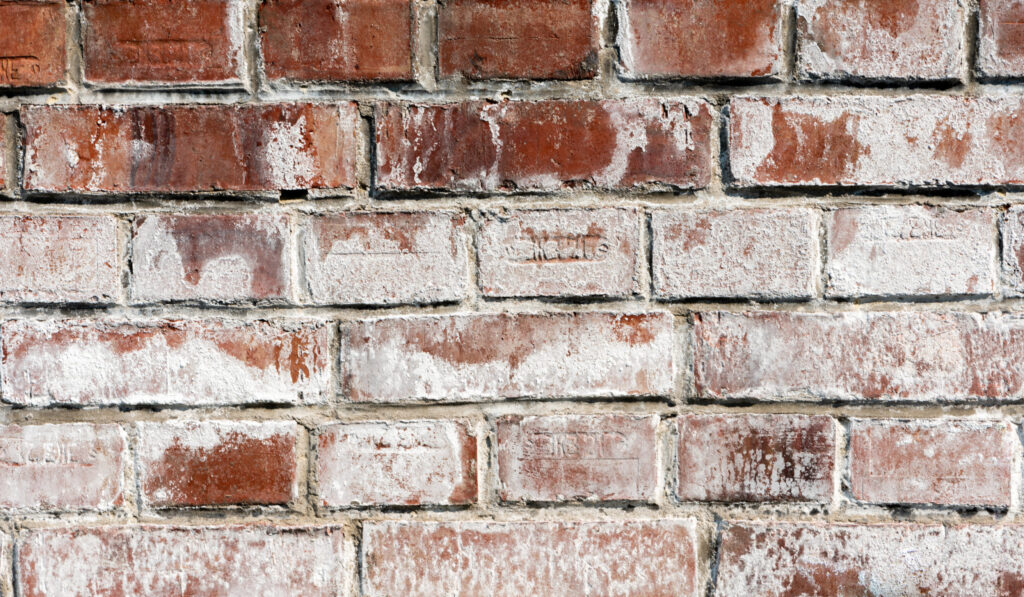
- White powdery deposits on surfaces (efflorescence).
- Distinct horizontal tidemarks or banding indicating capillary rise.
- Blistering, flaking or granular disintegration of the face.
- Delamination or plaster loss where salts concentrate at interfaces.
- Salt crystals pushing through coatings or membrane imperfections.
Diagnosis relies on mapping these signs against potential salt sources: adjoining ground conditions, proximity to the sea or roads, prior use of contaminated materials, and alterations to drainage or ventilation. You should also consider human interventions that unintentionally worsen salt retention or trap salts, such as poor detailing, impermeable resurfacing, or changes to internal heating and ventilation. Those interventions often alter drying regimes, raise relative humidity, or trap soluble salts in locations where they can crystallise internally.
Management approaches require you to address both the moisture movement and the salt load. Reducing ongoing moisture ingress and restoring breathable drying paths are primary actions. Where salts are already present and active, controlled desalination methods, localised sacrificial render or replacement of heavily damaged fabric may be necessary. Selection of surface treatments must balance reducing surface wetting against the risk of trapping salts; you should prefer measures that maintain or reinstate moisture vapour permeability where possible.
You should use monitoring and simple tests to guide intervention choices. Non-destructive moisture mapping, salt testing (spot tests or ion-specific analysis), and progression photography provide evidence for whether salts are mobile, where they crystallise, and how fast damage advances. In many cases, observing the response after altering drainage or ventilation gives clearer information than a single snapshot, because salt-related decay depends on recurring cycles.
You must expect that short-term experiments and observations will reveal initial trends but not the full development of damage, which often unfolds over months or years. Accelerated lab trials help you spot mechanisms and relative susceptibilities, but field outcomes reflect the complexity of mixed salts, variable climate cycles and construction history. Use experiments to inform likely mechanisms and to test the effects of different treatments, but plan for longer-term monitoring to confirm that remedial actions reduce crystallisation and material loss.
Practical tips for property and asset management:
- Prioritise stopping active water sources first; persistent moisture fuels salt transport and crystallisation.
- Avoid impermeable coatings unless you are certain they will not trap salts in critical layers; test small areas first.
- Use breathable repairs and detailing to restore drying routes and reduce internal crystallisation risk.
- Undertake salt analysis before large-scale interventions so you can target desalination or sacrificial layers appropriately.
- Monitor after remedial work; recurring deposits or new tidemarks indicate continuing sources or trapped salts.
You can interpret visible salt patterns to infer moisture pathways and likely sources. Horizontal tidemarks often indicate capillary rise from ground or trapped water; vertical streaks can point to point sources of ingress; widespread surface efflorescence may indicate recent construction moisture or soluble salts in building materials. Matching these patterns with site history and environmental exposure helps you decide between targeted repairs, hygroscopic treatments, or full replacement of compromised materials.
Tables and visual records support decision-making. A simple checklist helps standardise observations and clarifies whether you face surface-only deposits or concealed, structural risk:
| Observation | Likely implication | Action priority |
|---|---|---|
| Surface powder only | Cosmetic efflorescence; salts on exterior | Low–medium: clean and monitor |
| Tidemark bands | Capillary rise or groundwater source | High: address moisture source |
| Blistering or spalling | Crypto-efflorescence causing internal stress | Very high: investigate desalination/replacement |
| Salts through coatings | Imperfections trapping salts under membranes | High: remove or modify coating, restore breathability |
You should treat salt-related decay as a process driven by moisture regimes, salt chemistry and material response. Identifying and interrupting the moisture pathways while considering the salt type and distribution offers the best chance to limit ongoing damage and preserve fabric.
Frequently Asked Questions
What mainly causes salt-related decay in brickwork?
Salt damage usually starts when soluble salts enter masonry with water. Common sources include ground salts, sea spray, de-icing salts, fertiliser runoff and salts from building materials such as cement or lime. As moisture evaporates, salts crystallise in pores and joints; repeating cycles of crystallisation and hydration build pressure that fractures mortar and brick, and promotes surface powdering and flaking.
How does rising damp weaken masonry over time?
Rising damp carries dissolved salts upward from the ground into walls. You’ll see salts concentrate where evaporation is greatest, typically at skirtings and lower courses. The combined action of salts and persistent moisture accelerates mortar decay, causes plaster and render to detach, and can lead to ongoing salt crystallisation cycles that reduce the structural and aesthetic integrity of the masonry.
What steps reduce water ingress in stone walls?
Use a layered approach to limit moisture entry and movement:
- Repair or renew defective roofs, gutters and downpipes to stop water ingress.
- Improve external ground falls and drainage to keep soil water away from foundations.
- Replace impermeable path or paving that channels water towards walls.
- Use breathable repairs and compatible materials (lime-based mortars and renders) so trapped moisture can evaporate.
- Install discreet damp-proof measures where appropriate, such as improved ventilation at ground level or physical damp-proof courses, after diagnosing the cause.
Which methods work best to fix masonry damaged by salts?
Select repairs based on diagnosis of salt type and moisture source:
- Remove and replace severely damaged mortar and render with compatible, vapour-permeable mixes (lime mortars).
- Perform salt extraction and allow controlled drying before replastering.
- Use poultices or sacrificial renders to draw salts out of porous stone, replacing them once loaded with salts.
- Repair rainwater goods and drainage to stop further salt transport.
- Avoid impermeable coatings that trap moisture; choose breathable finishes and monitor drying progress.
How does efflorescence affect masonry and how can you spot it?
Efflorescence is the white, powdery deposit of salts left on surfaces after water evaporates. You’ll notice it on bricks, mortar faces and plaster as chalky or crystalline streaks. While often cosmetic at first, persistent efflorescence signals ongoing moisture movement and salt supply; left unchecked it can lead to deeper salt crystallisation within pores and eventual material breakdown.
Why is good ventilation important to control moisture in masonry?
Ventilation helps moisture escape rather than accumulate inside wall cavities and internal finishes. By lowering internal humidity and promoting evaporation away from sensitive layers, you reduce the chance of salt crystallisation and fungal growth. You should balance ventilation with thermal comfort and use extract fans, trickle vents or passive vents where needed while keeping masonry repairs breathable.
